15 Sep 2026
Sinus Augmentation Masterclass by Dr.Yazad Gandhi
Sinus Augmentation Masterclass: Why This 3-Day Course Is the Real Deal
A deep dive into what we covered, who it was designed for, and why hands-on surgical training still beats everything else in implant education.
If you’ve placed implants in the anterior mandible and premolar regions and feel reasonably confident about it, but the moment someone walks in with a resorbed posterior maxilla, your pulse goes up... you’re not alone. The posterior maxilla is where implant dentistry gets genuinely challenging. Thin bone, pneumatized sinuses, proximity to vital structures, and a healing biology that doesn’t always cooperate. This is exactly the gap that our recently concluded Sinus Augmentation Masterclass at Acharya Foundation was designed to fill.
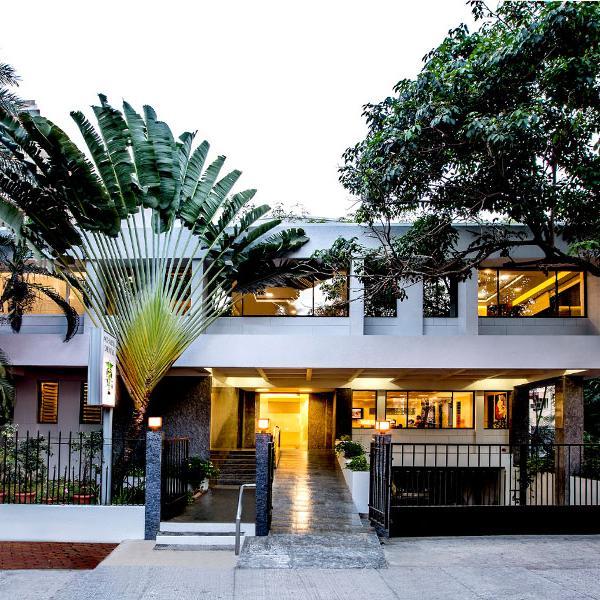
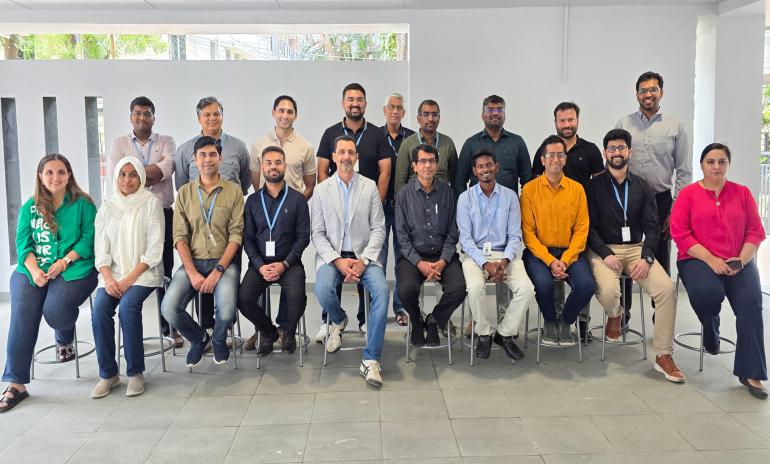
Held over three intensive days in December 2025 at our facility in Nungambakkam, Chennai, this course was led by Dr. Yazad Gandhi, an oral and maxillofacial surgeon with fellowship credentials from both the ITI and the ICD, trained at Sahlgrenska University Hospital in Gothenburg, Sweden and Ninewells Teaching Hospital in Dundee, Scotland. He also serves as a Key Opinion Leader (KOL) for Versah, the company behind the osseodensification drilling protocol. In short, not someone teaching from slides alone.
Who Was This Course Designed For?
Let’s be specific. This wasn’t an introductory implant course. If you’re looking for dental courses after BDS that cover the basics of implant placement, there are plenty of options for that. This masterclass was built for clinicians who are already placing implants but want to graduate to managing the complex maxillary posterior defect: the kind of case where you need to augment bone height through sinus floor elevation before you can even think about placing a fixture.
Whether you’re an MDS looking to add surgical depth or a BDS practitioner who has done enough straightforward cases to know what you don’t know yet, this course met you where you are and pushed you forward.
What Makes Sinus Augmentation Such a Critical Skill?
Here’s the clinical reality. A significant proportion of patients requiring implants in the upper posterior region present with inadequate bone height due to sinus pneumatization following tooth loss. You can avoid these cases and refer them out, or you can learn the techniques to manage them yourself, predictably.
Sinus augmentation, whether direct (lateral window approach) or indirect (transcrestal/osteotome approach), is one of the most well-documented and predictable bone grafting procedures in implant dentistry. The literature supports high survival rates for implants placed in augmented sinuses when the technique is executed properly. The key phrase there is when the technique is executed properly. That’s where dental education that combines didactic knowledge with genuine surgical practice becomes non-negotiable.
The Curriculum: Not Just Slides and Lectures
One of the things that set this masterclass apart from the typical dental certificate courses available in India was the sheer depth and breadth of the curriculum. Dr. Gandhi structured the three days to cover every clinically relevant angle, not just the surgery itself. Here’s what the didactic sessions covered:
Foundational Sciences Applied Clinically: anatomy, physiology, and microbiology of the maxillary sinus, taught not as textbook revision but as directly relevant decision-making inputs. Understanding the Schneiderian membrane, its vascularity, its thickness variations across different regions of the sinus floor. All of this matters when you’re elevating it and hoping it stays intact.
Sinus Pathology and Its Implications: not all sinuses are created equal. Mucosal thickening, polyps, septa, previous Caldwell-Luc procedures. Dr. Gandhi walked through how these findings on a CBCT should influence your treatment plan, and when they should make you pause or refer.
Radiological Assessment: a session dedicated to what to actually look for on a cone beam scan before planning sinus surgery. Not a CBCT interpretation course per se, but a focused module on sinus-specific radiological assessment criteria.
Case Selection and Assessment: arguably one of the most valuable sessions. Knowing how to do a sinus lift is one thing. Knowing when to do one, which approach to choose, and when to stage versus do simultaneous implant placement is what separates a competent clinician from a truly skilled one.
Treatment Planning: staging, timing, and sequencing decisions. When do you graft and wait? When do you place simultaneously? What residual bone height thresholds guide your decision between a transcrestal and a lateral approach?
Transcrestal vs. Direct Lifts (The Decision Tree): this was a structured, evidence-informed framework for choosing your approach. Not opinion-based, but grounded in the current consensus and available literature.
Biomaterials: graft materials, membranes, and the rationale behind material selection. Xenografts, alloplasts, combinations: what to use, why, and what the evidence actually supports.
Instrumentation: dedicated coverage of the tools and their applications, including the Versah osseodensification bur system that Dr. Gandhi uses extensively.
Surgical Technique in Detail: flap design (when to use a full thickness flap vs. split thickness), antrostomy design (extent, shape, and techniques), membrane elevation protocols, perforation check-and-tackle strategies, graft feed technique, and wound closure with appropriate suture materials and techniques.
Postoperative Management: medication protocols, patient instructions, and follow-up planning.
Complications: a thorough module covering intraoperative complications (membrane perforations being the big one), early postoperative issues, and delayed complications. Plus a section on tackling repeat grafting cases and what to do when a previous graft didn’t go as planned.
Advanced Procedures and Recent Developments: to cap off the didactic portion, an overview of where the field is heading.
The Hands-On Component: Where the Real Learning Happens
This is where this course truly differentiated itself from most dentistry courses available today. You can watch a hundred YouTube videos of sinus lifts. You can read every systematic review. But until you’ve held the instruments in your hand and felt the resistance of a membrane separating from bone, or worse, felt it give way, you haven’t really learned the procedure.
The hands-on exercises included:
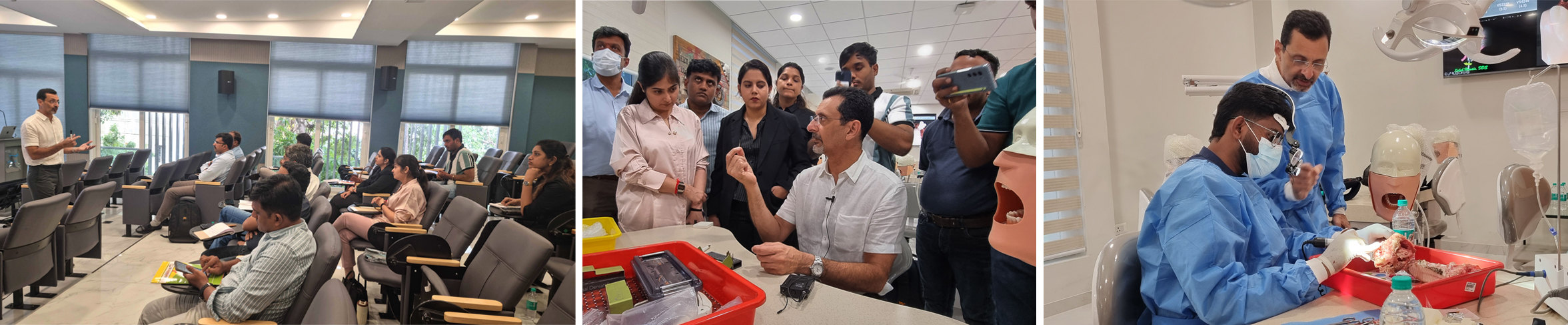
Lateral Window Preparation on Animal Jaws: participants performed the full lateral window protocol, from flap reflection to antrostomy creation, membrane elevation, graft placement, and window sealing with a membrane. This was done on animal jaw specimens, providing realistic tissue feedback that synthetic models simply cannot replicate.
Transcrestal Lifts with Densah Burs: using Versah’s osseodensification protocol, participants practiced indirect sinus elevation on imported bone simulation models. The osseodensification technique is particularly elegant because it allows you to preserve and compact bone rather than remove it. When applied to transcrestal sinus lifts, it offers a minimally invasive approach with good evidence behind it. Both Protocol I and Protocol II were covered.
Sequential Membrane Elevation: learning the feel of progressive membrane separation, understanding the limits, knowing when you’ve got full elevation versus when you’re at risk.
Perforation Management: because it’s not a matter of if you’ll perforate a Schneiderian membrane in your career, it’s a matter of when. Learning how to identify, classify, and repair membrane perforations is arguably as important as learning the lift itself.
Graft Feed Protocol: the technique of introducing particulate graft material into the elevated space without displacing the membrane or creating voids.
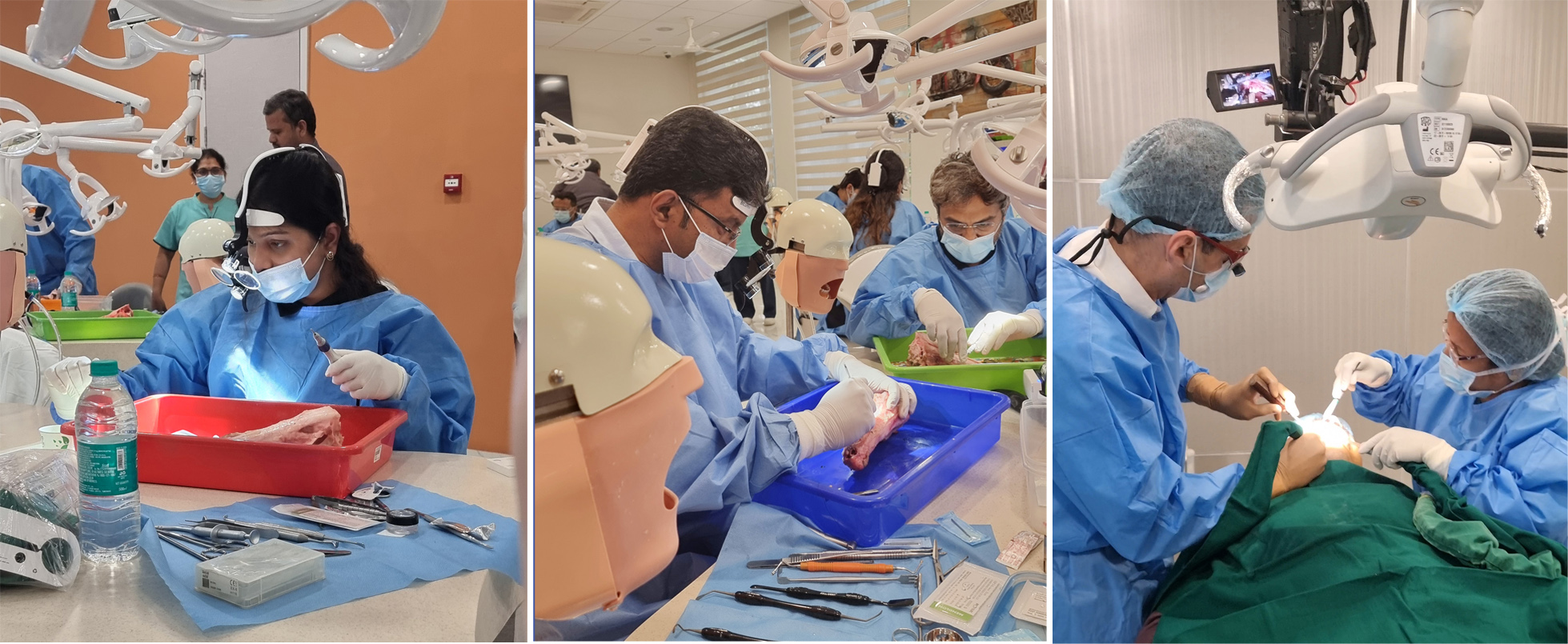
Two Live Surgeries: Seeing It Done in Real Time
Beyond the hands-on exercises, participants observed two live surgeries performed by Dr. Gandhi:
1. Lateral Window Sinus Augmentation: the full protocol, from incision to closure, performed on a patient in real time with commentary and Q&A throughout.
2. Transcrestal Sinus Augmentation with Osseodensification Protocol I/II: demonstrating the indirect approach using Densah burs on a live case.
Watching an experienced surgeon navigate the realities of live anatomy, dealing with variations, making real-time decisions, and managing the unexpected, is an educational experience that no recorded video can fully replicate.
Industry Support and Quality of Materials
The course was supported by Versah (the osseodensification company), Katara Dental, and BioHorizons Camlog, ensuring that participants had access to the actual instrumentation and biomaterials used in contemporary sinus augmentation practice. Relevant full-text articles were also shared after the course, allowing participants to go deeper into the evidence base on their own time.
Why Acharya Foundation for Dental Education?
At Acharya Foundation, our philosophy is straightforward: Advanced Education. Simplified. We believe that advanced clinical skills shouldn’t be locked behind prohibitively expensive international courses or diluted into superficial weekend workshops. Our dental education programs are designed to be clinically rigorous, hands-on intensive, and practically structured so that participants leave with skills they can actually apply in their practices on Monday morning.
Whether you’re exploring dental courses online for theoretical foundations or looking for in-person dental certificate courses with real surgical training, our approach is to combine both. Strong evidence-based didactics with meaningful hands-on and live surgery exposure.
Our facility in Nungambakkam, Chennai is purpose-built for dental education, with the infrastructure to support live surgeries, small-group hands-on sessions, and the kind of mentorship-driven learning that actually changes clinical practice.
What Participants Walked Away With
Beyond the obvious clinical skills, here’s what this masterclass gave participants:
• A clear decision-making framework for choosing between transcrestal and lateral approaches, based on residual bone height, sinus anatomy, and patient factors.
• Hands-on confidence with both direct and indirect techniques, practiced on realistic substrates.
• Complication management skills: knowing how to handle a membrane perforation calmly and effectively.
• Updated biomaterial knowledge: not just brand names, but understanding the why behind material selection.
• A library of evidence: curated full-text articles to support continued learning after the course.
Looking for the Right Dental Course After BDS? Here’s What to Prioritize
If you’re a young dentist or a recent BDS graduate evaluating your options for continuing education, here’s our honest take: prioritize courses that give you genuine hands-on time. Look for faculty with verifiable training credentials and active clinical practices. Check whether the course includes live surgery observation. It’s a strong indicator of confidence in what’s being taught. And look for a curriculum that covers complications and failures, not just ideal cases. That’s where the real learning is.
The sinus augmentation masterclass checked every one of those boxes. And if this is the kind of depth you’re looking for in your continuing dental education, keep an eye on our upcoming programs at Acharya Foundation.
For information about upcoming courses and programs at Acharya Foundation, contact Amudha at +91 97909 27244.
Acharya Foundation | 7, Thirumurthy Nagar, 6th Street, Nungambakkam, Chennai 600034
Advanced Education. Simplified.