31 May 2026
Immediacy Masterclass by Dr. Udatta Kher - February 2026
Implant Dentistry Through Modern Dental Education
Continuing education plays a crucial role in modern clinical practice. Dentistry is evolving rapidly, with new surgical techniques, digital workflows, and biologically driven treatment approaches redefining how clinicians deliver care. As a result, structured learning opportunities have become essential for practitioners who want to remain at the forefront of the profession.
Across the world, dentists are increasingly investing in Dentistry Courses, Dental Diploma Courses, and structured training programs to refine their skills and expand their clinical capabilities. These programs provide clinicians with the opportunity to learn advanced techniques, gain hands-on experience, and stay updated with the latest developments in dental science.
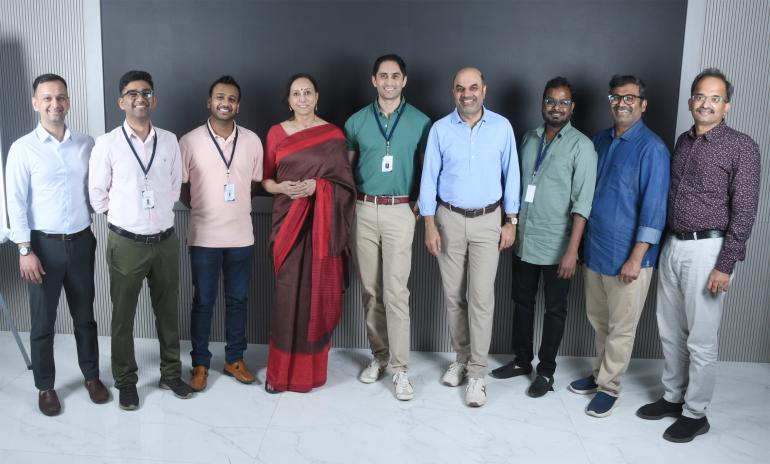
Recently, Acharya Foundation hosted The Immediacy Masterclass, an intensive two-day clinical training program focused on immediate implant placement and partial extraction therapies. The course brought together dentists from different parts of the country who were looking to enhance their understanding of contemporary implant protocols.
Mentored by Dr. Udatta Kher, the program focused on bridging the gap between theoretical knowledge and practical surgical execution. Over two immersive days, participants explored the biological foundations of immediate implant placement, observed live surgical procedures, and practiced key techniques through hands-on simulation.
Programs like these reflect the growing demand for high-quality Dental Education and advanced training pathways for dentists seeking meaningful professional development.
The Growing Importance of Continuing Dental Education
For many clinicians, graduation is only the beginning of their educational journey. The complexity of modern dentistry means that dentists must continue learning throughout their careers.
Whether it is mastering implant surgery, learning digital dentistry workflows, or developing advanced restorative skills, continuing education programs play a central role in professional growth.
Many dentists today actively seek courses after BDS to expand their expertise and open new opportunities in clinical practice. These may include specialized workshops, Dental Diploma Courses, advanced surgical training programs, or structured mentorship programs.
Continuing education provides several key advantages:
- Exposure to new clinical techniques
- Improved diagnostic and treatment planning skills
- Hands-on experience with modern tools and technologies
- Opportunities to interact with experienced faculty and peers
- Greater confidence in managing complex clinical cases
In this context, focused training programs like the Immediacy Masterclass provide an important platform for clinicians who wish to deepen their understanding of implant therapy.
Understanding Immediate Implant Placement
Traditionally, dental implants were placed several months after tooth extraction to allow time for bone healing. While this approach remains predictable, it can also result in significant loss of bone and soft tissue architecture.
Immediate implant placement offers an alternative strategy. Instead of waiting for the extraction site to heal, the implant is placed at the same appointment as the extraction.
This approach can offer several benefits:
- Reduced treatment time
- Preservation of alveolar bone structure
- Maintenance of soft tissue contours
- Fewer surgical interventions for the patient
However, immediate implant placement is not simply about accelerating treatment timelines. It requires careful planning, precise surgical technique, and a deep understanding of biological principles.
The Immediacy Masterclass began by addressing these fundamental concepts, helping participants understand when immediate implant placement is appropriate and how clinicians can achieve predictable outcomes.
Day One: Foundations of Immediate Implant Placement
The first day of the program focused on the biological principles and clinical techniques that support successful immediate implant therapy.
Participants explored the science behind implant timing and how extraction site biology influences long-term outcomes.
Key topics included:
- Timing of implant placement following extraction
- Biological rationale for immediate implant therapy
- Atraumatic extraction techniques
- Implant placement in the aesthetic zone
- Dual-zone grafting concepts
- Management of extraction sockets with minor defects
- Strategies for provisional restorations
One of the most important themes discussed during the sessions was the concept of atraumatic extraction. Preserving the buccal plate and surrounding bone is critical for maintaining the natural architecture of the ridge.
When extractions are performed with minimal trauma, the surrounding tissues remain more stable, making immediate implant placement more predictable.
Participants also learned about immediate implant placement in challenging situations such as molar extraction sockets, where larger socket dimensions and multiple roots present additional clinical considerations.
Another important aspect covered was the fabrication of provisional restorations. Immediate temporization can play a crucial role in shaping soft tissue contours and improving aesthetic outcomes in anterior implant cases.
These discussions provided participants with a comprehensive understanding of how surgical and prosthetic considerations interact in immediate implant therapy.
Live Surgical Demonstrations
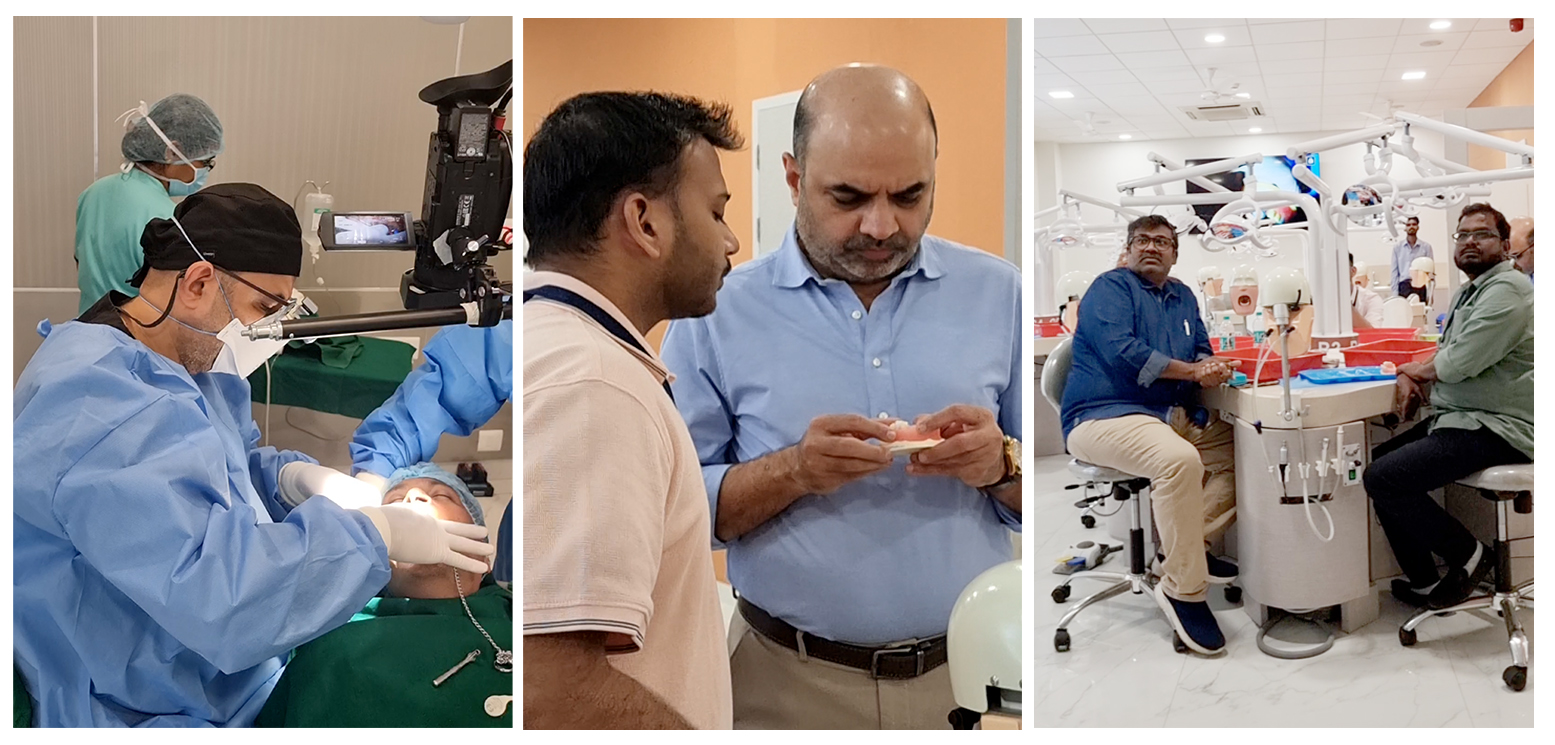
A highlight of the masterclass was the opportunity for participants to observe live surgical procedures.
Two live surgeries were performed during the course, demonstrating the real-world application of the techniques discussed in the lectures.
During these procedures, participants observed:
- Minimally traumatic tooth extraction
- Preparation of extraction sockets for implants
- Implant placement in fresh sockets
- Management of surrounding bone and soft tissue
Live surgical demonstrations provide a unique educational experience. They allow clinicians to observe clinical decision-making in real time and gain insight into the nuances of surgical technique.
Every step of the procedure was explained and discussed, giving participants a deeper understanding of how theoretical concepts translate into clinical practice.
Hands-On Training: Developing Practical Skills
While lectures and surgical demonstrations provide valuable insights, hands-on practice is essential for developing clinical competence.
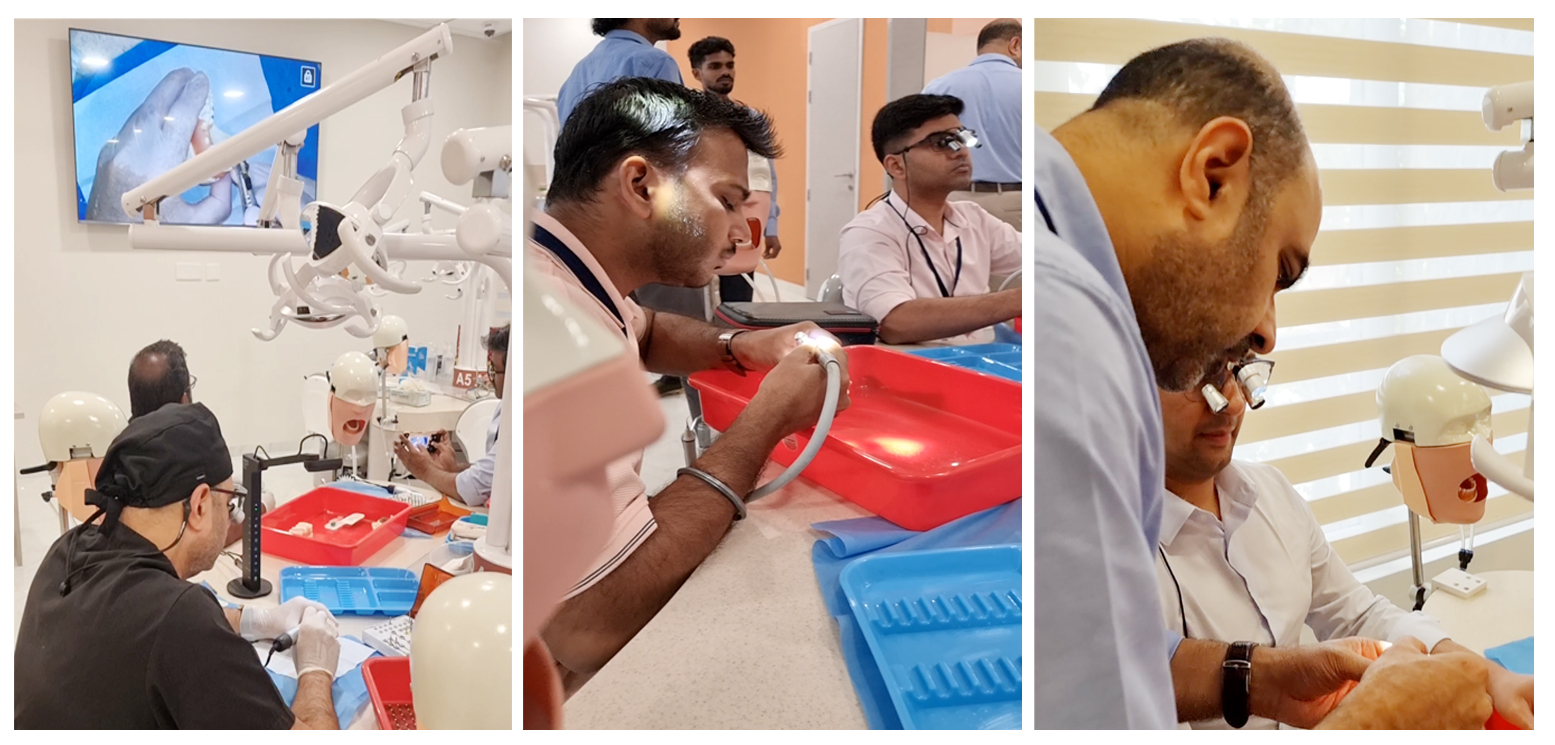
The masterclass therefore included extensive hands-on training sessions, where participants worked on specialized simulation models designed to replicate realistic extraction socket anatomy.
During these sessions, participants practiced:
- Implant placement in single-rooted sockets
- Immediate implant placement in multi-rooted sockets
- Fabrication of chairside provisional restorations
These practical sessions allowed participants to develop a deeper understanding of implant positioning, angulation, and prosthetic considerations.
Hands-on training is particularly important in implant dentistry because even small variations in implant placement can significantly affect the final restorative outcome.
Day Two: Partial Extraction Therapies
The second day of the masterclass introduced participants to Partial Extraction Therapies (PET), a group of techniques designed to preserve the natural architecture of the extraction site.
PET procedures involve retaining portions of the tooth root during extraction in order to maintain the periodontal ligament and surrounding bone.
One of the most widely discussed PET procedures is the socket shield technique, in which the buccal portion of the root is preserved while the implant is placed behind it.
This approach helps maintain the buccal bone plate and supports soft tissue contours, particularly in aesthetically demanding cases.
Participants explored several important aspects of PET, including:
- Biological rationale for partial extraction therapies
- Step-by-step protocols for socket shield preparation
- Instruments required for shield preparation
- Case selection criteria
- Contraindications and limitations
- Management of potential complications
Understanding these concepts is essential for clinicians who wish to incorporate tissue-preserving techniques into their implant practice.
Hands-On Training in Socket Shield Techniques
The second day also included hands-on training focused on socket shield preparation and PET procedures.
Participants practiced:
- Shield preparation in incisors and premolars
- Implant placement following shield preparation
- Fabrication of provisional restorations
These exercises allowed participants to experience the tactile aspects of the procedure and develop an appreciation for the precision required in PET techniques.
By practicing on simulation models, participants were able to refine their surgical skills in a controlled environment before applying these concepts in clinical practice.
Why Structured Training Programs Matter
Courses like the Immediacy Masterclass highlight the importance of structured, faculty-led training programs in dentistry.
While textbooks and online resources provide valuable information, clinical skills are best developed through a combination of:
- Guided instruction
- Live surgical observation
- Hands-on training
- Interactive discussions
For many dentists exploring courses after BDS, programs like these provide an ideal pathway to develop specialized skills without committing to long academic programs.
Such initiatives complement traditional Dental Diploma Courses and academic training by offering focused, clinically oriented learning experiences.
Expanding Access to Dental Education
The landscape of professional education in dentistry is evolving rapidly. Today, dentists have access to a wide range of learning opportunities, including:
- Short-term clinical workshops
- Advanced Dental Diploma Courses
- Fellowship programs
- Mentorship-based training
- Dental courses online
Online learning platforms have made it easier for clinicians to access lectures, case discussions, and theoretical modules from anywhere in the world.
However, surgical disciplines like implant dentistry still require hands-on training to develop practical competence.
Programs that combine digital learning resources with in-person clinical training represent an ideal model for modern Dental Education.
The Role of Acharya Foundation in Professional Development
Acharya Foundation was established with the vision of creating a platform for high-quality continuing dental education.
The facility is designed specifically to support advanced training programs, offering:
- Lecture spaces for interactive learning
- Simulation laboratories for hands-on training
- Clinical environments suitable for surgical demonstrations
By hosting programs led by experienced faculty, the foundation aims to provide dentists with access to meaningful educational opportunities that enhance both knowledge and clinical skills.
Such initiatives are particularly valuable for dentists seeking courses after BDS that can help them expand their scope of practice and build confidence in advanced procedures.
Key Takeaways from the Immediacy Masterclass
Participants left the masterclass with several important insights:
1. Preservation of tissue architecture is critical for long-term implant success.
2. Immediate implant placement requires careful planning and surgical precision.
3. Partial extraction therapies offer promising solutions for maintaining ridge anatomy.
4. Hands-on learning is essential for mastering advanced surgical techniques.
5. Continuing education plays a vital role in professional growth.
These lessons reinforce the importance of structured learning environments where clinicians can engage deeply with both theory and practice.
The Future of Dentistry Courses
As dentistry continues to advance, the demand for specialized training programs will only increase.
Dentists today are increasingly seeking Dentistry Courses, Dental Diploma Courses, and advanced training programs that help them stay competitive in a rapidly evolving profession.
Educational platforms that combine expert faculty, practical training, and collaborative learning environments will play a key role in shaping the future of dental education.
Programs like the Immediacy Masterclass represent an important step toward creating a culture of continuous learning within the dental community.
By investing in professional development and embracing modern educational opportunities—including dental courses online and hands-on clinical training—dentists can continue to deliver high-quality care while advancing their own careers.