15 Sep 2026
Mastering Smiles: A Three-Day Veneer Masterclass with Dr. Janu Shah
There is a particular kind of patient walking into Indian dental practices in 2026 that did not exist ten years ago. She is twenty-eight, works in marketing or tech or fashion, has spent the morning before her appointment scrolling through Reels and Instagram reels of smile makeovers from clinics in Mumbai, Delhi, and Dubai, and she has come to ask one specific question. Can you give her that smile?
What that question actually contains is a long answer. It contains an assumption about preparation depth, an unspoken question about colour, a quiet anxiety about whether the result will look fake, an unfamiliarity with the timelines involved, and a deep wish for the appointment to feel as well-judged as the social media posts that brought her in. The clinicians who handle that conversation well, and who deliver outcomes that match the conversation, are the ones whose practices grow on word of mouth and patient referrals. The clinicians who hesitate end up referring her elsewhere.
Mastering Smiles is the course that turns dentists into the first category.
It is a three-day live-patient and hands-on veneer masterclass mentored by Dr. Janu Shah, run at Acharya Foundation in Chennai. Each batch carries a small group, runs from 9 AM to 5 PM across three days, and costs INR 36,500 plus 18 percent GST. Participants leave with a complimentary veneer bur kit, a place in a dedicated WhatsApp mentorship group, and a clinical workflow they can take into their practice the following Monday.
Why Veneer Dentistry Is Now a Core Competence, Not a Niche
For most of dental history, porcelain veneers belonged to a small group of specialists in a few cities in the world. The technique was demanding, the materials were unforgiving, the lab interface was expensive, and the patient pool was narrow. That has changed completely in the last decade.
Three forces have driven the change. Lithium disilicate restorations, particularly the IPS e.max family, made minimally invasive porcelain restorations both predictable and accessible. Adhesive dentistry matured to the point where bonded porcelain restorations now have published survival rates above 95 percent at ten years. And patient demand exploded as social media flattened the global beauty standard and made smile aesthetics a routine consumer expectation in any city large enough to have an airport.
The result is that veneer dentistry sits at the centre of modern aesthetic practice. Patients who would have asked for a clean and a polish ten years ago are now asking for a six-tooth or eight-tooth smile design. Practices that can deliver that work, predictably and ethically, grow. Practices that cannot, either refer it out or watch the patient leave.
The skill is teachable. What is needed is structured exposure to the full workflow, with live patient demonstrations, hands-on simulation practice, and direct mentorship from a clinician who does the work every week.
Why Dr. Janu Shah
Dr. Janu Shah is one of a small group of Indian aesthetic dentists whose clinical work is regularly cited as the benchmark in smile design across the country. She combines a serious technical practice with the kind of patient communication skills that aesthetic dentistry actually requires, and she has refined a teaching workflow that walks clinicians through the entire veneer journey, from the first consultation to the final cement removal.
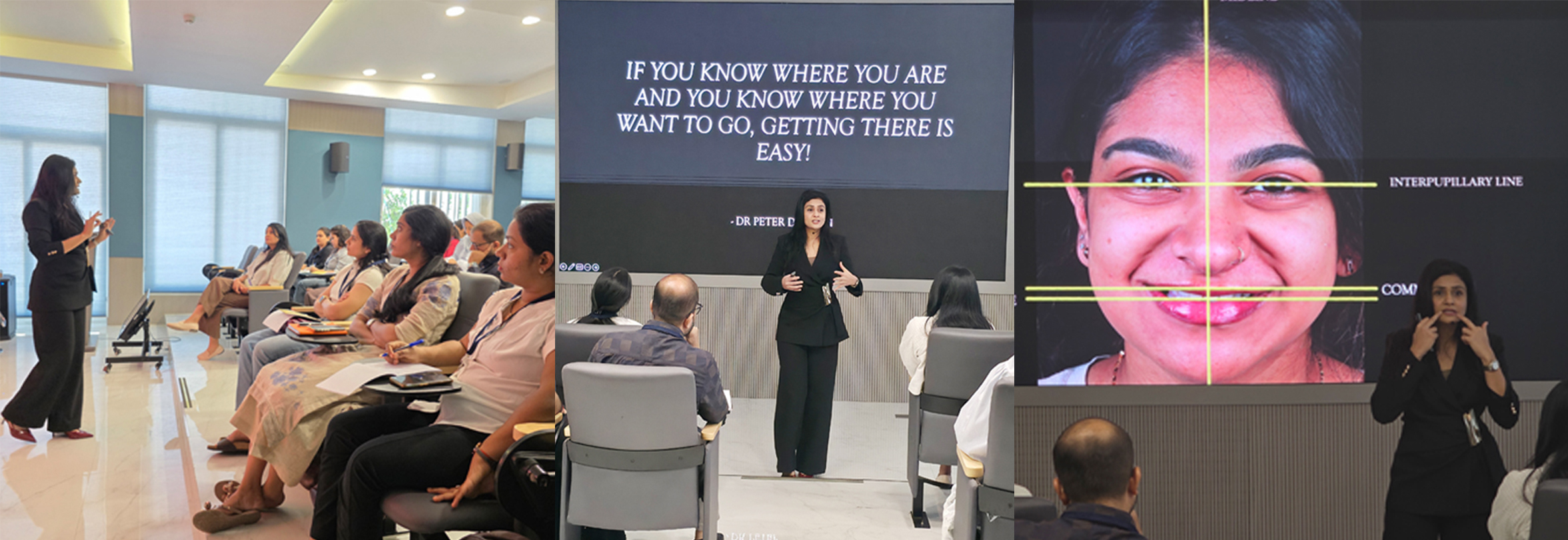
She mentors the Mastering Smiles programme personally across all three days. The live patient cases are her own. The hands-on exercises in the simulation lab are walked through with her on the floor, giving direct feedback on each participant's preparation, temporization, and bonding work. The WhatsApp mentorship group that follows the course continues with her involvement, and past participants regularly post case photographs for her critique long after the course is over.
The Three-Day Structure
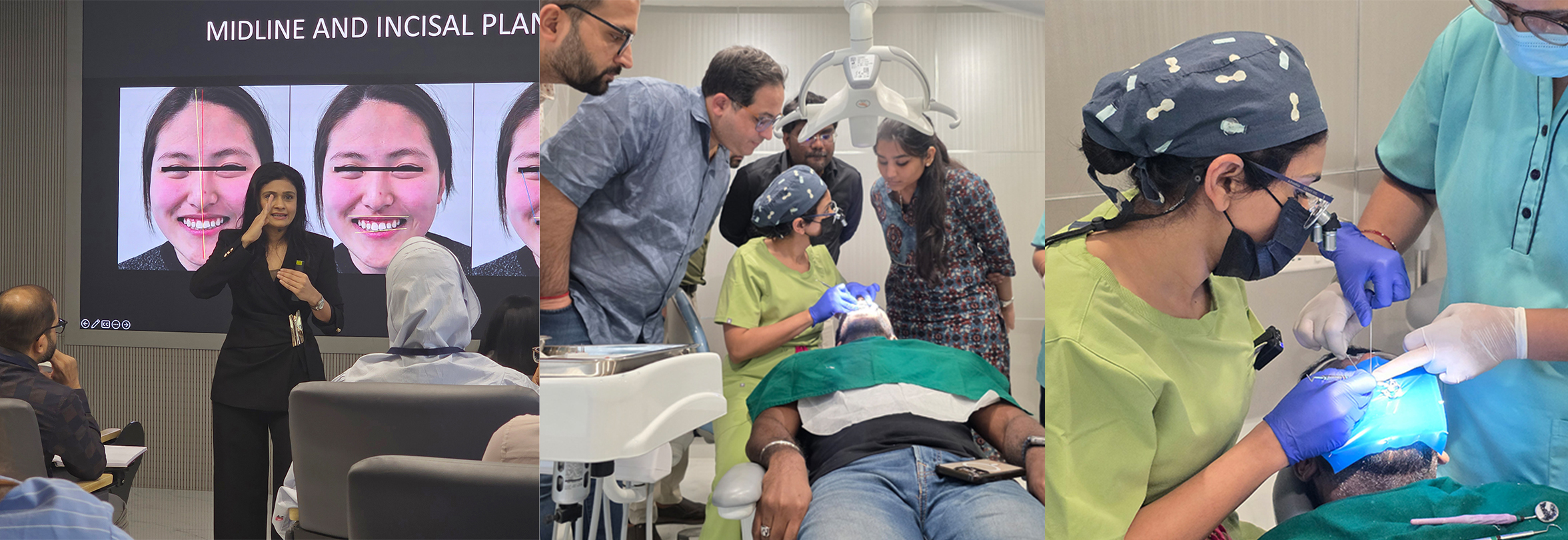
Day one anchors the science. It opens with case selection for smile design, covering which patient is and is not a candidate for veneers, the differences between additive composite mock-ups and reductive porcelain workflows, and the conversation that needs to happen with the patient before any preparation begins. The morning then moves into photography for documentation and treatment planning. Aesthetic dentistry without photography is impossible to plan, impossible to communicate to a lab, and impossible to defend in the rare event of a clinical disagreement. Participants are walked through the standard photographic series, the cross-polarised setup for shade and texture documentation, and the digital tools used to convert photographs into smile design proposals.
The afternoon of day one moves into digital versus analogue smile design workflows. Both have a place. The analogue wax-up, the chairside mock-up using bis-acrylic, the digital design built in software like Smile Cloud or DSD App, and the hybrid approach where a digital design is translated into a physical mock-up. Patient communication around the mock-up, the consent conversation, and the decision points that come up when the patient sees their proposed result for the first time.
Day two is the live patient day. Dr. Janu Shah performs a full veneer workflow on a live patient in the surgical operatory, streamed in HD to the auditorium. The case begins with chairside diagnosis and treatment planning, walks through preparation of six to eight anterior teeth using contemporary minimally invasive designs, includes temporization with bis-acrylic and shade matching, the try-in procedure with try-in pastes for final shade verification, and concludes with final bonding under rubber dam. Each stage is narrated, with participants able to ask questions during the procedure. The full case is recorded and shared with participants after the course.
Day three is the hands-on day. Participants work in the simulation lab with phantom heads, instrument trays, and loupes. The exercises mirror the live patient day. Putty index fabrication using the wax-up as a starting point. Tooth preparation practice on models, walking through different veneer preparation designs including window, feathered, incisal overlap, and full wrap designs. Intraoral scanning using a 3Shape unit. Veneer temporization technique. Digital smile design software training with the same workflow Dr. Janu uses in her clinical practice. The day closes with a question and troubleshooting session that draws on cases participants bring from their own practices.
The Modules in More Detail
The lecture content is built around nine clinical modules.
Case selection for smile design covers the diagnostic conversation. Periodontal status, occlusion, parafunction, smile line, lip dynamics, ceramic versus composite indications, and the specific signals that should make a clinician slow down rather than proceed.
Photography for documentation and planning covers equipment selection for the practice, the standard intra and extraoral series, the cross-polarised filter setup for accurate shade communication, and the post-processing workflow that takes a raw image and turns it into something useful for the lab.
Interdisciplinary treatment planning covers when a veneer case actually needs orthodontic preparation, when periodontal crown lengthening must come first, and how to manage the patient who arrives wanting a quick aesthetic solution to what is actually a structural problem.
Digital versus analogue smile design workflows compare the two approaches, walk through the software options available in the Indian market, and help participants choose the workflow that suits their practice volume and lab relationships.
Smile mock-ups and patient communication walk through the bis-acrylic mock-up technique, the conversation around the mirror moment, and the structured questions that help a patient articulate what they actually want versus what they think they want.
Tooth preparation designs cover the contemporary minimally invasive preparation philosophy, the use of depth-cutting burs and silicone reduction guides, and the specific design choices that suit different clinical situations.
Shade selection and temporization cover the practical realities of shade matching in modern dentistry, the use of try-in pastes, and the temporization technique that gives the patient a preview of their final result.
Laboratory communication covers what a ceramist actually needs from the clinician to deliver a predictable result. The photographs, the impressions or scans, the design specifications, and the dialogue that prevents the kind of remake conversation that no one enjoys.
Bonding protocols cover the cementation workflow from start to finish. Isolation under rubber dam, surface treatment of the porcelain, surface treatment of the tooth, the adhesive sequence, light curing protocols, and the finishing and polishing steps that determine whether the veneer disappears into the smile or sits as a visible restoration.
The Hands-On Component
The simulation lab at Acharya Foundation is built around phantom heads with realistic typodonts and full instrumentation. The setup allows participants to work in the same posture and with the same instrument access as they would in a clinical operation. Loupes are provided for those who do not have their own.
The hands-on exercises move through the full workflow. Participants fabricate a putty index from a wax-up, perform tooth preparations using depth-cutting burs and reduction guides, scan their preparations using an intraoral scanner, fabricate temporary restorations using a putty matrix and bis-acrylic, and practise the bonding sequence on prepared models.
The faculty walks the floor through every exercise. Participants get individual feedback on their preparation depth, margin design, finish line placement, and bonding technique. The cohort size is set deliberately to make this individual attention possible. There is no version of this course where a participant ends up working through the exercises without direct supervision.
The Live Patient Component
Live patient training is the part of the course that sets it apart from a lecture-and-typodont format. Watching a treatment plan move from initial consultation through to final bonding, on a real patient, with real soft tissue management and real occlusion considerations, is the closest a continuing education programme can come to the experience of an actual chairside fellowship.
Dr. Janu Shah's live patient case demonstrates the contemporary minimally invasive workflow on six to eight anterior teeth. Participants see the preparation sequence, the temporization, the try-in conversation with the patient, and the final cementation under the rubber dam. Every decision point is narrated. Questions are taken throughout the procedure.
The patient is selected ahead of the course to represent the kind of case that participants are most likely to encounter in their own practices. This is not a celebrity smile makeover for the show. It is a realistic case that demonstrates the principles that translate directly into private practice.
The Post-Course Mentorship
The most valuable part of the Mastering Smiles experience often happens after the course ends. Participants are added to a dedicated WhatsApp mentorship group where Dr. Janu Shah and the Acharya Foundation team continue to answer questions, review case photographs, and troubleshoot the early independent cases that follow the course.
This kind of ongoing access is rare in continuing education and is one of the reasons participants return for subsequent Acharya Foundation courses across other clinical disciplines. The relationship that begins in the simulation lab continues for months and sometimes years afterwards.
The Complimentary Veneer Bur Kit
Every participant receives a veneer bur kit at the end of the course. The kit contains the specific burs Dr. Janu uses in her clinical preparations, including depth-cutting burs, finishing burs, and the polishing sequence. This is one of those small details that quietly removes friction from the path between learning a technique and applying it. Many participants have started their first independent case using exactly this kit within days of returning home.
Who Should Attend
The Mastering Smiles masterclass is for general dentists who already place restorations and want to add a structured veneer workflow to their practice, for cosmetic dentists who have been doing veneers informally and want to systematise their approach, and for prosthodontists who want to refine the aesthetic and bonding elements of their existing work.
The course assumes basic restorative fluency and familiarity with adhesive dentistry. It does not assume previous veneer experience. Participants from a range of seniority levels typically attend, and the classroom mix benefits from that diversity. Past cohorts have included dentists three years out of BDS as well as senior practitioners with their own multi-chair clinics.
For clinicians who have never placed a single composite restoration, the foundational restorative courses at Acharya Foundation, including Dr. Vishal Gupta's Direct Composite and Rubber Dam course, are the better starting point. Once the fundamentals are in place, Mastering Smiles is the natural progression into aesthetic and indirect work.
The Investment
The course fee is INR 36,500 plus 18 percent GST. Included in this is the three-day intensive, all simulation lab materials, the intraoral scanner access during the hands-on day, lunch and refreshments across all three days, the live patient case recording, the veneer bur kit, ongoing WhatsApp mentorship, and an Acharya Foundation certificate of training in aesthetic veneer dentistry.
For a practice in a tier-one Indian city, the financial return on a structured veneer skill arrives quickly. A single six-veneer aesthetic case typically generates revenue several times the course fee, and the kind of patient who walks in for veneer work usually has additional dental needs and a social network of similar patients. The clinical investment in this skill pays back in case mix and practice growth in a way that few other CE programmes match.
For delegates travelling to Chennai, the foundation can assist with hotel recommendations. The Nungambakkam neighbourhood carries several hotels in the INR 4,000 to 12,000 per night range within easy walking distance of the campus, and is well connected to Chennai International Airport.
How to Register
Mastering Smiles runs in batches through the year. Upcoming dates are listed on the course page at acharya-foundation.com/course/mastering-smiles-live-patient-hands-on-veneer-masterclass. Past cohorts have filled before the published deadlines, so early registration is recommended.
To register, or to ask about upcoming dates, accommodation, or course fit for your current clinical experience, the booking page at acharya-foundation.com/booking accepts enquiries directly, and the team responds within a working day. The full course brochure is downloadable from the course page.
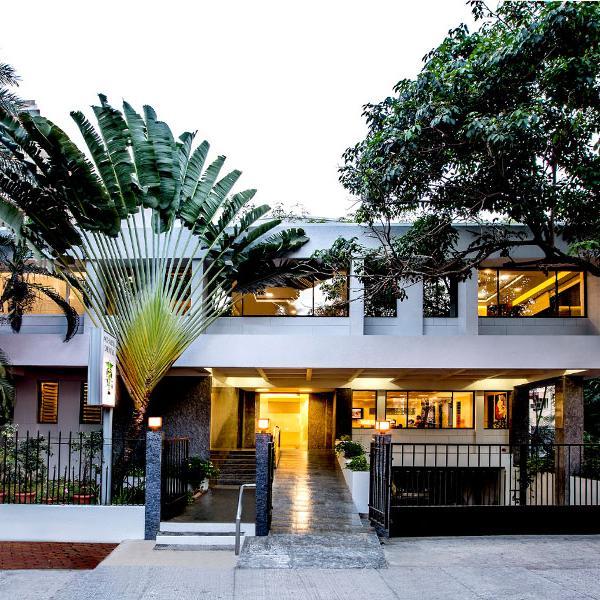
For general queries, the foundation can be reached at acharya@acharyadental.com or on +91-44-35111100. The campus is at 7 Thirumurthy Nagar, 6th Street, Nungambakkam, Chennai 600034. Prospective participants are welcome to visit the simulation lab and auditorium before committing.
A Final Thought
The dentist who can deliver a confident, well-judged smile makeover is the dentist whose practice grows fastest in the next decade. Patient demand is rising, the technique is teachable, and the gap between an average veneer case and an excellent one is almost entirely a function of training. Mastering Smiles exists to close that gap in three intensive days, under the mentorship of one of India's most respected aesthetic dentists, in a facility built for this kind of focused, hands-on, live-patient learning.
We hope to see you in a future batch in Chennai.