15 Sep 2026
Sinus Augmentation: Why Most Implant Dentists Avoid the Posterior Maxilla, and How a Three-Day Masterclass with Dr. Yazad Gandhi Changes That
Every implant dentist has the same private list of cases that quietly travel from the treatment plan back to the referral pad. For most of us, the maxillary first and second molar sites sit near the top of that list. The bone is thin, the sinus is close, the patient is impatient, and the technique that would solve it sits in a part of the surgical syllabus that no one ever quite finished teaching us.
That gap is the reason this course exists.
The Sinus Augmentation Masterclass at Acharya Foundation is a three-day, intensive, hands-on dental course mentored by Dr. Yazad Gandhi. It runs from the 21st to the 23rd of August 2026 at the foundation's Nungambakkam campus in Chennai, between 9 AM and 6 PM each day. The investment is INR 33,900 plus 18 percent GST, and the cohort is deliberately small so that every participant gets time at the chair, time on the animal jaw, and time with the faculty. If you have been placing implants for a few years and you have started turning away maxillary posterior cases because the sinus is in the way, this is the course that closes that gap.
Why the Posterior Maxilla Is the Single Biggest Bottleneck in Implant Dentistry
Walk through any implant practice's case log and the pattern is consistent. Anterior maxillary implants are taught early, premolar regions are forgiving, and the mandibular posterior carries enough cortical bone to make most cases predictable. The first and second molar regions of the maxilla, though, sit in a different category.
The pneumatised sinus eats into the alveolar ridge over years of edentulism. By the time a patient asks to replace a missing 26 or 27, what was once eight or ten millimetres of subantral bone has often shrunk to three or four. Place a standard implant into that and you either compromise primary stability, perforate the Schneiderian membrane, or accept that the long-term outcome will be questionable. Refer the case out, and you lose the patient to a colleague who will then carry on with the rest of their dentistry. Both options hurt.
Sinus augmentation, done well, takes that case out of the bottleneck and puts it back inside your practice. The procedure has been documented since the late 1970s, the science is mature, and the survival rates of implants placed into augmented sinuses now sit at or above those placed in native bone. The reason most dentists still avoid it is not science. It is training.
The Course in Outline
Across three days, the masterclass moves a participant from radiological diagnosis through to graft maturation, with hands-on practice and live surgical observation at every stage. The structure is deliberately layered.
The first half day is clinical theory. Sinus anatomy, the relationships between the maxillary sinus and the alveolar process, the position of the posterior superior alveolar artery, septa anatomy, mucosal thickening, and the pathology that disqualifies a sinus from elevation. Microbiology and the implications of pre-existing sinusitis. The clinically relevant physiology that drives membrane behaviour and graft healing.
The next block is radiological assessment. Cone beam CT interpretation, what to look for in axial, sagittal, and coronal views, how to estimate residual bone height accurately, how to identify a septum that will change your antrostomy design, and how to recognise the patient who needs an ENT review before any surgical planning begins.
Case selection comes next. A decision tree that walks through transcrestal versus direct lateral window techniques based on residual bone height, sinus morphology, number of implants planned, simultaneous versus staged placement, and prosthetic position. Treatment planning, including the staging and timing of grafts.
Then the surgical core. Biomaterial choices and why you would pick xenograft over allograft over a composite blend, instruments and their applications, flap design, antrostomy design with multiple techniques compared, the full lateral window protocol, the transcrestal protocol using the Versah osseodensification system, perforation check protocols, perforation containment protocols, suturing material and technique, and the entire postoperative bundle including medication and patient instructions.
The final block covers complications. Intraoperative, early postoperative, and delayed postoperative. Tackling repeat grafting cases. Advanced procedures and recent developments in sinus elevation.
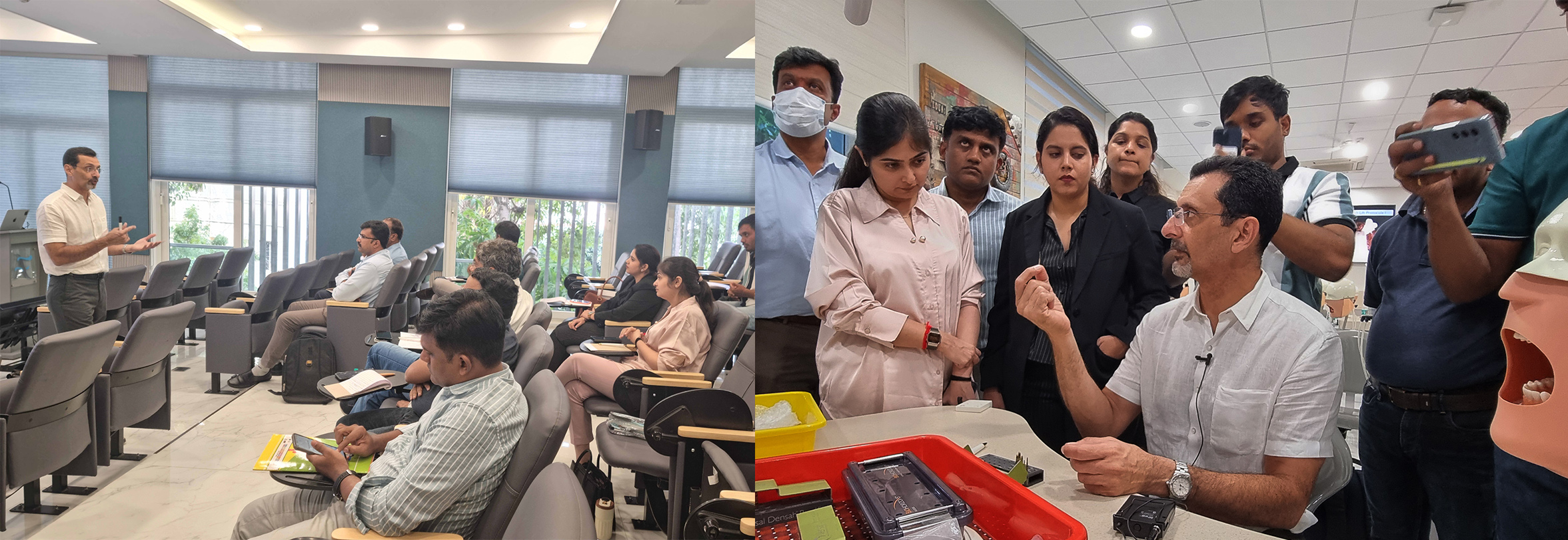
Two live surgeries are performed during the three days. One is a full lateral window sinus augmentation. The other is a transcrestal sinus lift using the Versah osseodensification protocol. Both surgeries are streamed to the auditorium in HD, with intraoperative moderation, audio commentary, and live question-and-answer. Participants take home an HD recording of both surgeries.
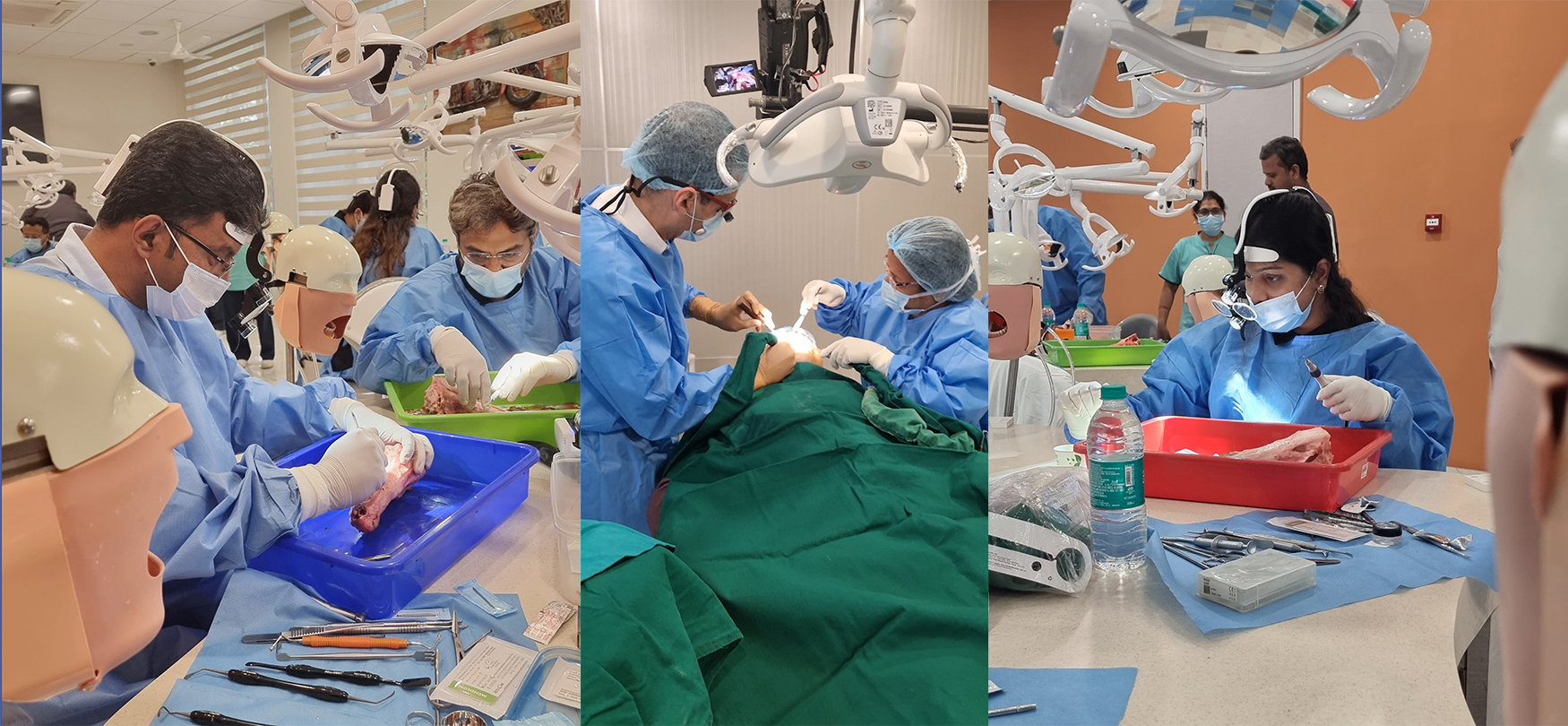
The hands-on lab is built around two exercises. The first is lateral window preparation, membrane elevation, graft feed, and window seal performed on goat or sheep jaws, which carry tissue characteristics close enough to human bone to make the practice meaningful. The second is the transcrestal lift performed with Densah burs on imported high-fidelity bone simulation models, which allow participants to feel the tactile difference between standard drilling and osseodensification.
What Sets This Apart From a Typical Implant Course
The implant CE market is crowded. Filtering it requires knowing what a serious hands-on course actually looks like.
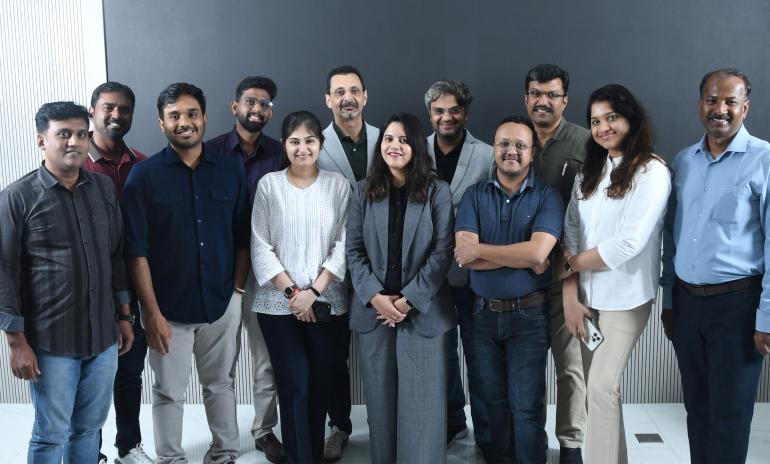
First, the faculty. Dr. Yazad Gandhi holds an MDS in Oral and Maxillofacial Surgery, is a Fellow of the International Team for Implantology and the International College of Dentists, and serves as a Key Opinion Leader for Versah, the company that developed the osseodensification technique. He trained at Sahlgrenska University Hospital in Goteborg, Sweden, and at Ninewells Teaching Hospital in Dundee, Scotland. He has been performing and teaching sinus augmentation for over two decades. The course is built around his clinical protocols, refined through thousands of cases. He is the one operating in the live surgery suite, walking the hands-on floor during exercises, and personally answering questions.
Second, the ratio. The cohort is capped to ensure one-on-one faculty attention. This is not a 50-person seminar with two demonstrators trying to cover the room. The size is set deliberately so that every participant gets feedback on their lateral window preparation, their membrane elevation technique, and their suturing.
Third, the hands-on substrate. There is a meaningful difference between practising sinus elevation on a typodont and practising it on an actual animal jaw with intact sinus membrane and realistic bone density. Goat and pig jaws are used because they offer the most clinically relevant tactile experience available outside of cadaver work. The imported sinus simulation models for the transcrestal exercises are the same ones used in Versah's international training programmes.
Fourth, the live surgery setup. Acharya Foundation's surgical suite is directly connected to the 90-seater auditorium by a 170-inch LED screen, with multi-camera angles, audio capture, and individual tablets at each seat for closer viewing. Participants are not watching a recording. They are watching the case unfold in real time, with the operator narrating decisions as they are made and answering questions as they arise. This is closer to the experience of a fellowship rotation than a continuing education seminar.
Fifth, the post-course support. A WhatsApp mentorship group is established at the start of the course and continues afterwards. Participants share their first independent cases for feedback, post radiographs for second opinions, and ask follow-up questions as they incorporate the techniques into their own practices. Relevant peer-reviewed articles are shared after the course, giving participants the scientific reading list to anchor what they learned in their hands.
Sixth, the complication-first approach. Most courses teach the procedure as if everything will go smoothly. This one walks deliberately through what happens when it does not. Membrane perforations are managed with collagen patches and fibrin sealants. Bleeding from intraosseous anastomoses is controlled. Graft escape, graft migration, and graft infection are addressed with named protocols. Participants leave knowing not just how to do the surgery but how to manage the moments where the surgery tries to go wrong.
Who This Masterclass Is For
This is an advanced course. The ideal participant is already placing implants confidently in routine sites and is now hitting the wall in the maxillary posterior. That clinician might be three years into private practice, might be running a multi-chair clinic with a referral problem, or might be a periodontist or oral surgeon who wants to formalise their sinus augmentation skills with structured training. The course assumes basic implant surgical fluency, familiarity with CBCT interpretation, and a clinical baseline that allows the participant to engage with advanced material from day one.
It is also a useful course for MDS graduates from Periodontology, Oral Surgery, and Prosthodontics departments who want to add sinus augmentation to their existing implant practice. Many of our past participants have come through this route. The classroom mix tends to be a healthy blend of seasoned implant dentists, MDS specialists, and ambitious general practitioners several years past BDS, and the discussion benefits from that range of experience.
If you have never placed an implant, this is not the right starting point. Once you have around fifty cases under your belt and you are ready to expand into complex posterior maxilla rehabilitation, this masterclass is the next clear step.
Industry Partners and the Vendor-Neutral Promise
The course is supported by Versah, BioHorizons Camlog, Katara Dental, and Credence Healthcare. These are some of the most respected names in implant systems, surgical instrumentation, and biomaterials. Their support keeps the course well equipped without making it a sales pitch for any one product line.
Versah's osseodensification technology features prominently because it is, at the moment, the most evidence-supported technique for transcrestal sinus elevation. The bur protocol allows controlled membrane elevation through the osteotomy site itself, without the need for separate osteotome tapping. For dentists who have been frustrated by the unpredictability of the original Summers technique, this is a meaningful upgrade. The course teaches both methods so that participants understand the principles, but the practical emphasis is on the osseodensification workflow because it is what most modern implantologists will use in their practices.
The biomaterials and membrane brands change from batch to batch as the industry evolves. What stays constant is the principle of teaching the underlying decision logic, so that participants can choose materials based on the clinical situation rather than on the brand that was in the room on the day of the course.
The Investment
The course fee is INR 33,900 plus 18 percent GST for the three-day intensive. This includes all surgical models, the animal jaws used in hands-on exercises, the instrument kits, lunch and refreshments across all three days, the HD recordings of both live surgeries, the post-course peer-reviewed article bundle, and an Acharya Foundation certificate of advanced training in sinus augmentation.
For most participants, the financial return shows up within the first six months of returning to practice. A single full-arch maxillary rehabilitation case retained inside the clinic, rather than referred out, typically covers the course fee several times over. The longer-term return shows up in case mix. Once a practice can confidently treat the maxillary posterior, the rest of the implant rehabilitations fall into routine.
For dentists travelling in from outside Chennai, the foundation can assist with hotel recommendations close to the campus. The Nungambakkam neighbourhood is central, well connected to Chennai International Airport, and walkable to several quality hotels in the INR 6,000 to 12,000 per night range.
What Past Participants Have Said
Acharya Foundation has now run several editions of the Sinus Augmentation Masterclass, including the December 2025 batch under Dr. Yazad Gandhi. Feedback from past delegates emphasises three things consistently. The clarity of the case selection framework, which removes the ambiguity around which patient gets which technique. The depth of the hands-on, which gives participants the muscle memory to start their first case at home with confidence. And the access to the faculty, both during the course and afterwards. Several delegates from the December 2025 cohort have already completed their first independent sinus lifts and shared cases back to the group.
The gallery from the December 2025 edition is available on the Acharya Foundation website, and the testimonials page carries written feedback from past participants across multiple courses.
How to Register
Registration is open for the 21st to 23rd August 2026 batch. Seats are limited and previous editions have been filled before the published deadline. To secure a place, participants can register directly through the course page at acharya-foundation.com/course/sinus-augmentation-3-day-masterclass, or reach Amudha on WhatsApp at +91-9790927244 for assistance with payment, accommodation, or scheduling questions.
The full course brochure is downloadable from the course page. It carries the day-by-day breakdown, the curriculum outline, and the faculty profile in detail.
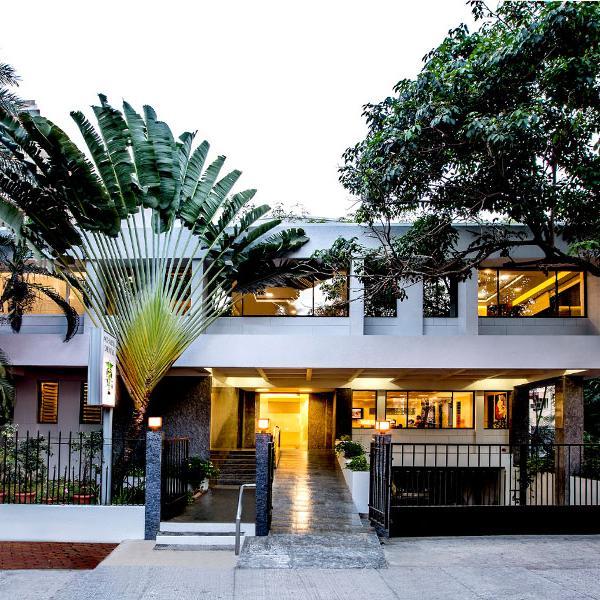
For general queries, the foundation can be reached at acharya@acharyadental.com or on +91-44-35111100. The center address is 7 Thirumurthy Nagar, 6th Street, Nungambakkam, Chennai 600034. Visitors are welcome to walk through the simulation lab, auditorium, and operatories before committing to the course.
A Final Word for the Dentist on the Fence
If you are reading this and weighing up whether three days off practice and a course fee are worth it, here is a simple way to decide. Pull up your case log from the last six months. Count the number of times a maxillary first or second molar case walked in, and write down how many you placed an implant on yourself, how many you referred out, and how many you simply did not treat. If that ratio bothers you, the course will pay for itself many times over.
Modern dentistry rewards range. The clinicians who treat what walks in the door, instead of triaging by what they happen to have been trained on, are the ones whose practices grow. The Sinus Augmentation Masterclass exists to put one more category of case firmly inside your range. We hope to see you in Chennai in August.